BVD Testing: What It Is, Why It Matters, and How to Get Help
If you’ve been struggling with symptoms of vision misalignment, such as dizziness, headaches, and reading difficulty, a validated BVD screening questionnaire can help identify whether BVD may be the cause.
By measuring how often and how severely these symptoms occur, the tool can guide whether further evaluation for potential vision-related causes may be appropriate for adults or children.
Binocular Vision Dysfunction (BVD) is a surprisingly common, but often misunderstood, condition that affects how your eyes work together as a team.
BVD is a type of vision dysfunction that affects eye alignment. Even a minor misalignment between your eyes can lead to significant symptoms, such as headaches, dizziness, blurred vision, difficulty concentrating, and more. Many people with BVD don’t realize their eyes are the problem, often going through years of misdiagnoses or ineffective treatments.
Standard eye exams typically focus on vision clarity (such as determining whether you need glasses or contacts for nearsightedness or farsightedness) but do not assess subtle eye misalignments, which are at the core of BVD. That’s why it’s essential to take a dedicated Binocular Vision Dysfunction Test if you’re experiencing symptoms that haven’t improved despite consulting various specialists.
This guide will help you understand what is BVD, why it can affect your quality of life, what to expect from a BVD test, and how to find relief.
Symptoms: Why You Should Seek a Binocular Vision Dysfunction Test
Living with BVD can feel overwhelming. The symptoms often mimic those of other conditions, leading many people down frustrating medical journeys without finding real answers. You might have been told you have migraines, anxiety, trouble focusing, or even ADHD, but treatments just haven’t worked.
Common Symptoms of BVD Include:
Chronic headaches or migraines, especially after reading or screen time
Blurred or double vision, even if your standard eye test is normal
Dizziness, lightheadedness, or vertigo
Difficulty with balance or coordination
Anxiety, especially in large, open spaces or crowded environments
Neck and shoulder pain, due to constant strain from compensating for vision issues
Eye strain or fatigue, particularly at the end of the day
Problems with depth perception, making driving or playing sports challenging
Reading difficulties, such as skipping lines or losing your place
Difficulty focusing, which can be mistaken for ADHD
Convergence insufficiency, which is difficulty with eye coordination during near tasks like reading
These symptoms can disrupt work, school, social activities, and even simple daily tasks like driving or walking in a busy area. Some people become so accustomed to the discomfort that they don’t even realize their symptoms aren’t normal.
You’ve visited multiple doctors or specialists without improvement.
You’ve been diagnosed with ADHD, dyslexia, or another learning disorder, but suspect vision plays a role.
You’ve had a concussion or other traumatic brain injury (TBI).
You experience symptoms that interfere with daily life but aren’t explained by other conditions.
A friend or healthcare provider recommended it based on your symptoms.
You have a family history of BVD.
At Vision Specialists Institute, we help individuals suffering from BVD find answers when other treatments haven’t worked. Here’s what that experience looks like by the numbers:
7 minutes
Average time to complete the test
Over 20 years
BVDQ in clinical use and refinement
35,000 patients
Evaluations behind the BVDQ score
1 in 5 adults
Est. prevalence of BVD symptoms
Behind every number is a person who finally got answers. Taking the BVD test can be the first step toward identifying BVD and starting a treatment that works. If you think your symptoms sound like BVD, take the BVD assessment today.
Conditions Diagnosed Through BVD Testing
While BVD itself is the primary focus of this test, understanding what the condition encompasses can help clarify its role in other health issues. Other vision conditions can complicate the diagnosis and treatment of BVD by affecting how the eyes focus light onto the retina, further exacerbating vision problems.
BVD May Be Misdiagnosed As:
Migraine Disorders: Chronic headaches are a hallmark of BVD.
Anxiety Disorders: Visual instability can make environments feel unsafe, leading to panic or avoidance.
ADHD or Learning Disabilities: Difficulty focusing, reading, or concentrating might stem from eye misalignment.
Balance Disorders: Trouble with gait, balance, or dizziness can suggest vestibular problems, but may actually originate from vision.
Lazy Eye (Amblyopia): This condition, often involving misalignment, can be mistaken for BVD and requires early diagnosis and treatment to prevent permanent visual processing issues.
BVD Linked to Other Conditions:
Post-Concussion Syndrome: Head trauma can cause or worsen BVD symptoms.
Vestibular Disorders: The eyes and vestibular system work together to maintain balance and clear vision during movement. When one is disrupted, it can cause symptoms like dizziness or visual instability that often mimic each other.
Reading and Learning Challenges in Children: Kids may struggle in school due to untreated BVD, which can severely affect their academic performance.
Vertical Heterophoria: This specific type of binocular vision dysfunction involves a subtle misalignment of the eyes, often missed in standard eye exams. Symptoms can include feelings of disorientation, movement while stationary, and significant discomfort or anxiety in certain environments.
Because BVD overlaps with so many conditions, getting properly diagnosed can transform your treatment plan and quality of life.
Do these symptoms sound familiar?
Take the BVD test to get your score and get relief.
Testing Details: How the Binocular Vision Dysfunction Test Works
The BVD Test is a symptom-focused self-assessment designed to identify whether you might be suffering from BVD. It’s tailored for different age groups and is quick and easy to complete from the comfort of your home.
Youth (9–13 years): Also about 7 minutes, depending on reading ability
Children (4–8 years): Roughly 6 minutes, with parental help
Additionally, a self-test for BVD can be done in five minutes by covering one eye and observing an object to assess changes in pain levels.
What the BVD Test Involves:
A series of questions regarding the frequency of your symptoms
How severe are these symptoms
How long you’ve experienced them
Possible health history that might be connected to your symptoms
Once completed, your answers are analyzed, and you are provided a BVDQ™ Score. If you have a high enough score, you’ll qualify for a virtual consultation with a BVD Specialist to discuss your results and available treatment options.
Understanding Your Results
Your BVD test results will be shared with you instantly after completing the assessment. They’ll indicate how likely BVD is contributing to your symptoms and whether further evaluation is needed.
It is crucial to accurately diagnose BVD, as severe symptoms can lead to prolonged suffering, preventing you from living a full and enjoyable life.
How Your BVD Test Score Works
Your answers add up to a single number called your BVDQTM score. The questionnaire has 25 questions, and each one is scored from 0 (you never have that symptom) to 3 (you always do). Added together, the total can range from 0 to 75. A higher score means your symptoms line up more closely with BVD.
A score that qualifies for BVD depends on age, because children and teens notice and describe their symptoms differently from adults:
Adults (ages 14 and older): a total of 15 or higher
Youth (ages 9 to 13): a total of 15 or higher
Children (ages 4 to 8): a total of 15 or higher
Your score alone does not diagnose BVD. It tells you whether your symptoms are strong enough for a full NeuroVisual evaluation to be worth your time.
What the Results Mean:
Positive for Possible BVD: You’ll be advised to schedule a free virtual consultation and discuss neurovisual treatment options.
Unlikely BVD: Your symptoms may stem from another condition, and further assessment by a BVD Specialist will not be recommended.
The BVD test itself doesn’t confirm a diagnosis. It’s a screening tool to help you and your healthcare provider determine if specialized testing is needed.
The Research Behind BVD Testing
The questionnaire behind BVD testing has been studied and published in peer-reviewed medical journals. That means the screening you’re trusting is built on real studies, not guesswork.
Feinberg DL, Rosner MS, Rosner AJ (2021), Validation of the Binocular Vision Dysfunction Questionnaire (BVDQ). Otology & Neurotology, 42(1), e66 to e74. A study of 126 patients; the questionnaire showed strong reliability (Cronbach’s alpha 0.91).
Doble JE, Feinberg DL, Rosner MS, Rosner AJ (2010).Identification of binocular vision dysfunction (vertical heterophoria) in traumatic brain injury patients and effects of individualized prismatic spectacle lenses in the treatment of postconcussive symptoms: a retrospective analysis. PM&R, 2(4), 244 to 253. In 43 patients with lingering post-concussion symptoms, aligning prism lenses was linked to an average 71.8% reduction in symptoms over about 3.5 months.
Rosner MS, Feinberg DL, Doble JE, Rosner AJ (2016). Treatment of vertical heterophoria ameliorates persistent post-concussive symptoms: A retrospective analysis utilizing a multi-faceted assessment battery. Brain Injury, 30(3), 311 to 317. A 38-patient study reported lower headache, dizziness, and anxiety after treatment.
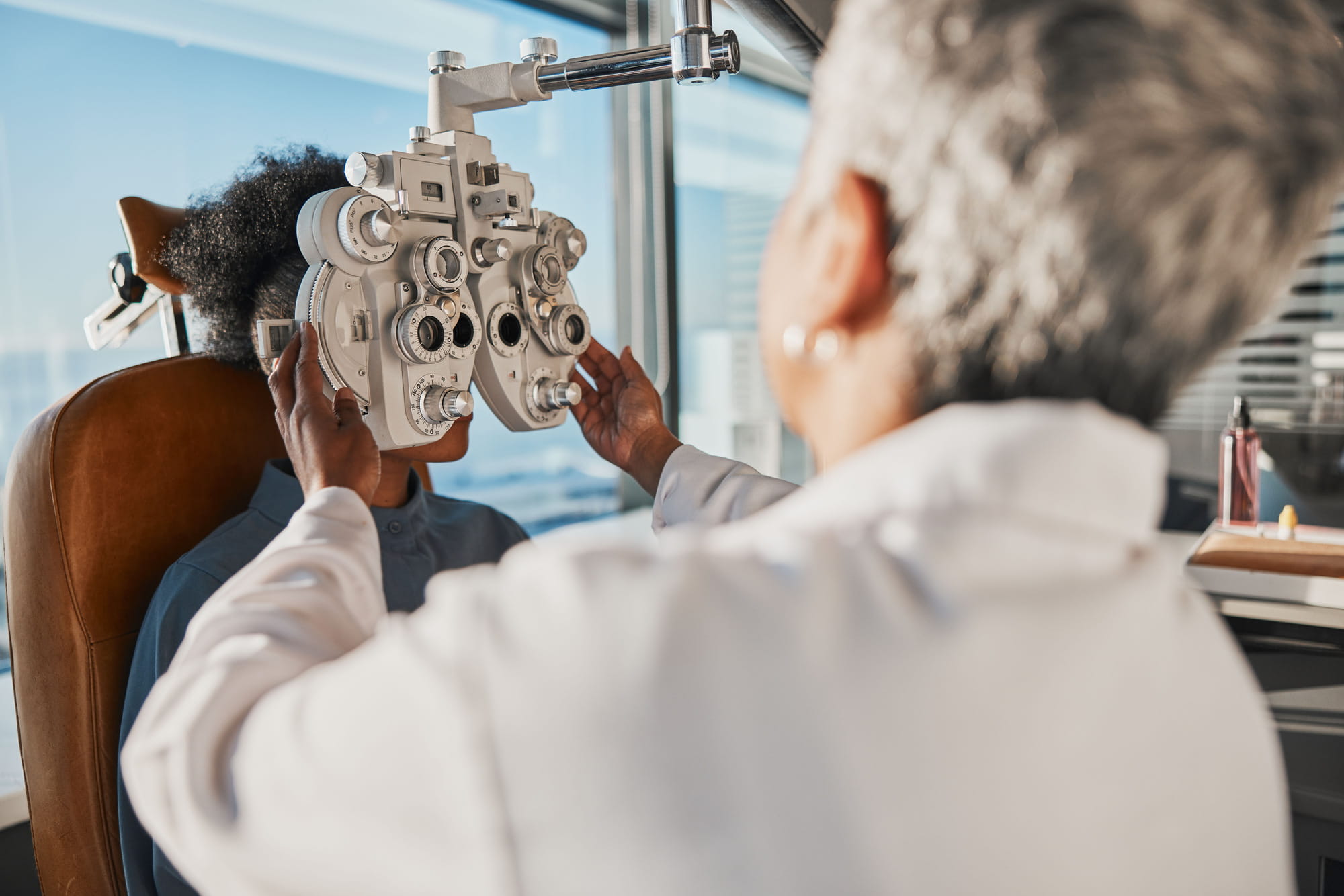
If your test suggests BVD, the next step is a comprehensive neurovisual exam. This detailed assessment looks at:
Eye alignment and coordination
How your eyes track and focus
Subtle misalignments that are not detected in regular eye exams
The direction of eye deviations during evaluation
Unlike standard eye tests, a neurovisual evaluation is specifically designed to detect BVD, and patients report immediate relief from treatment when BVD is the primary cause.
Step 2: Diagnosis and Treatment Plan
If BVD is confirmed, your specialist will create a treatment plan, typically utilizing microprism glasses.
Developing a treatment plan for BVD involves a comprehensive evaluation to tailor specific solutions and interventions that improve visual coordination, reduce symptoms, and address individual needs.
What Are Prism Glasses?
Prism lenses gently bend light, aligning the visual images your eyes see so they work together properly. This alignment reduces or eliminates the strain your eyes and brain experience from misalignment, leading to rapid symptom relief. Prism glasses can also correct vertical misalignment, a condition often associated with BVD, by improving eye alignment with microprism lenses.
Additional BVD Treatments:
Vision Therapy: Exercises to strengthen visual coordination (less commonly used than prism lenses)
Binocular Function: Vision therapy can improve binocular function through exercises aimed at enhancing coordination and muscle strength. These exercises, such as the pencil pushup and specialized computer programs, are most effective when combined with professional treatment.
Lifestyle Adjustments: Recommendations on screen time, reading, and driving, if needed
Many patients notice improvement within minutes of wearing specialty prism lenses, while others experience gradual relief over days or weeks.
Real Patient Experiences
Daria’s Story:
Daria, a bright young child, struggled at school despite having 20/20 vision. Her comprehension was far beyond her grade level, but her reading ability lagged significantly. Before treatment, she might have relied on one eye more than the other, which could have contributed to her difficulties. After receiving special prism glasses, she not only improved academically but also felt more confident and stopped bumping into objects as often.
Christine’s Story:
Christine suffered from daily headaches and nausea starting in elementary school. Despite seeing multiple specialists, her symptoms persisted. It was later understood that neurological issues might have contributed to her symptoms, complicating the diagnosis. After being diagnosed with BVD and wearing prism lenses, she experienced a dramatic decrease in headaches and anxiety.
These stories illustrate how BVD treatment can change lives, especially when conventional methods fail.
“Stories like these are why we do this work. When someone finally learns their years of headaches or dizziness trace back to a small eye misalignment, helping them undergo treatment and get their life back is what motivates us.”
-Mark Rosner, MD
Find Relief From BVD with Vision Specialists Institute
If you’ve been dealing with unexplained symptoms and haven’t found answers, BVD could be the missing piece. Take the BVD assessment today and take the first step toward better vision alignment, fewer symptoms, and a more enjoyable life.
For more information and to schedule your appointment, visit NeuroVisual Medicine today.
The BVD test is designed to be quick and accessible. For adults and children aged 9 and older, the test typically takes about 7 minutes to complete. For younger children between the ages of 4 and 8, the test takes just over 6 minutes with assistance from a parent or guardian.
Even though the test is short, it provides valuable insights into your symptoms and helps determine whether a more detailed neurovisual examination is necessary.
Yes, absolutely. NeuroVisual Medicine offers age-appropriate versions of the BVD test for children. Since BVD can significantly affect reading, concentration, and classroom performance, early detection is crucial. Facial asymmetry can contribute to BVD in children by causing misalignment of the eyes, which may lead to various vision-related symptoms and complications.
Ages 4–8: Parents are encouraged to help read and explain the questions. Children at this age may not fully understand or be able to articulate their symptoms without guidance.
Ages 9–13: Older children can typically complete the test independently, though some may still need help if reading is difficult due to BVD symptoms.
Taking the test with your child ensures more accurate responses, which can lead to quicker diagnosis and treatment.
Once you submit your BVD test responses, you or your child will receive a BVDQ™ score. The score that qualifies you for a free virtual consultation depends on age group:
Adults (ages 14 and older): a total of 15 or higher
Youth (ages 9 to 13): a total of 15 or higher
Children (ages 4 to 8): a total of 15 or higher
If your score is over the symptom threshold for your age group, you’ll qualify for a free virtual consultation with a BVD specialist to discuss your results.
From there, if the results suggest that you may have BVD:
You’ll be contacted to discuss scheduling a neurovisual evaluation.
Additional information may be requested to better understand your symptoms.
You will receive guidance on the next steps, including what to expect from an in-person exam.
If your results do not indicate BVD, you may be referred for further evaluation of other potential causes of your symptoms.
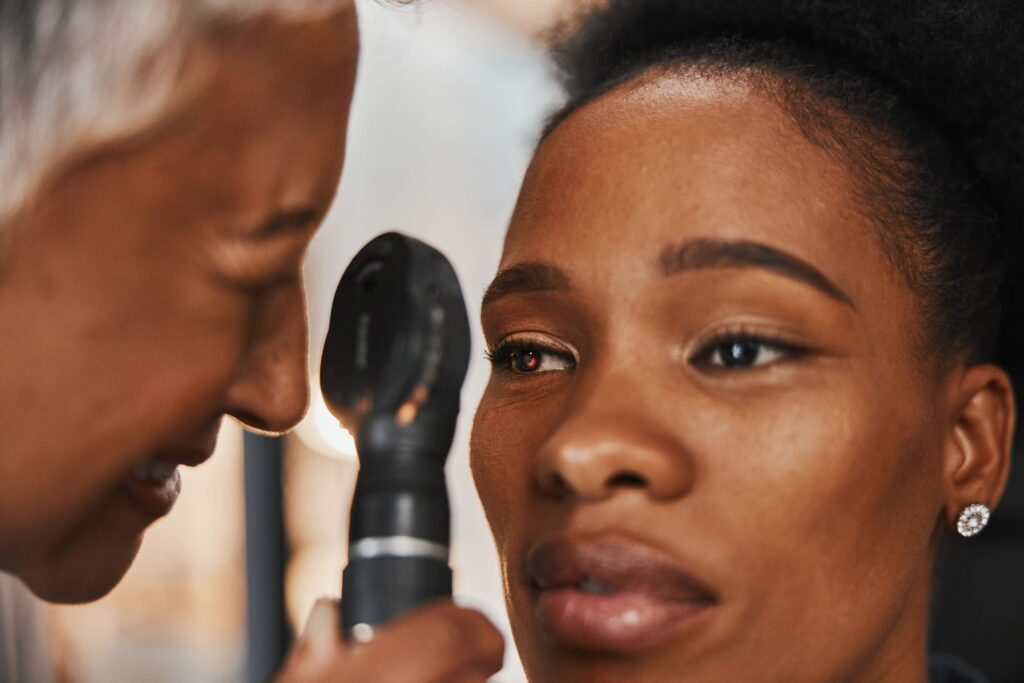
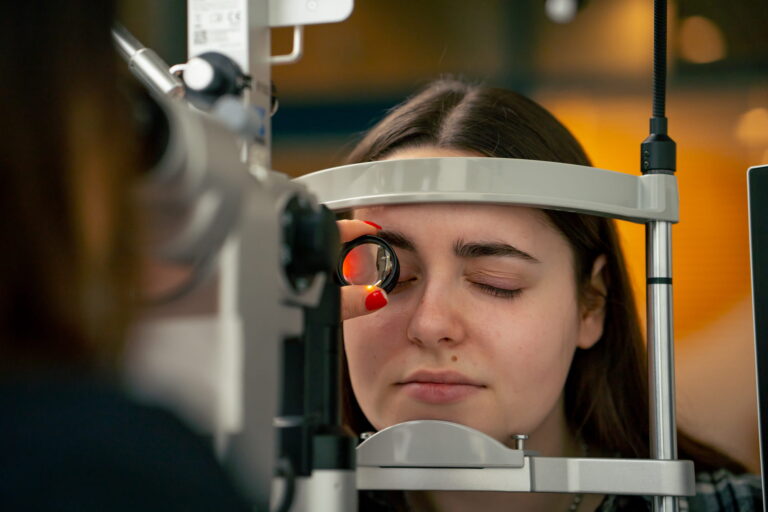
A NeuroVisual® evaluation is a specialized examination that goes beyond a typical vision check. While a standard eye exam focuses on visual acuity (how well you see at various distances), a NeuroVisual evaluation looks at:
Eye alignment: Detects subtle misalignments that can cause BVD.
Coordination between the eyes: Assesses how well your eyes work together.
Visual tracking and focusing: Evaluates how your eyes follow objects and shift focus.
Specific types of eye misalignments: Identifies subtle alignment issues that may require targeted treatment, such as microprism lenses, for accurate diagnosis and long-term relief.
This evaluation is specifically designed to diagnose BVD and is performed by a specialist trained in NeuroVisual® Medicine. It involves advanced techniques and tools not used in general optometry.
Prism glasses are the primary treatment for BVD. These lenses contain special prisms that bend light before it enters your eyes, effectively realigning the images seen by each eye so your brain can merge them into one clear picture. This helps in merging the two images caused by misalignment into a single, clear image.
Here’s how prism glasses help:
Reduce eye strain: No more overcompensating for misalignment.
Alleviate symptoms: Headaches, dizziness, and visual fatigue often improve quickly.
Enhance focus: Reading and concentration become easier.
Many patients experience immediate relief upon wearing prism glasses, while others notice steady improvement over days or weeks as their visual system adjusts.
Most patients report noticeable improvement within minutes of wearing prism glasses for the first time. Symptoms such as dizziness, blurred vision, and headaches often decrease significantly. Many also experience an improvement in their sense of balance shortly after starting treatment.
However, everyone’s experience is different. Some people feel better right away, while others notice gradual improvements over a few days to weeks.
Your specialist will monitor your progress and make refinements to your lenses as necessary. The key is consistent wear and follow-up to ensure the treatment is as effective as possible.
Once treated, many patients find long-term relief from their symptoms. However, ongoing care is important:
Periodic checkups are recommended to adjust prism lenses as your visual system adapts or changes over time.
In some cases, symptoms may re-emerge if treatment is stopped, but reintroducing prism lenses typically restores relief quickly.
A new injury can also cause symptoms to surface. A new NeuroVisual evaluation to address the harm caused by this new injury is recommended, and proper treatment will be discussed based on the specialist’s findings.
BVD management is often a lifetime commitment, but with proper care, it doesn’t have to disrupt your life.
Prism glasses are the most effective and commonly used treatment for BVD. Vision therapy, a series of eye exercises designed to improve eye coordination, may be recommended in certain cases, particularly if:
You have significant visual processing issues.
You’ve had a recent traumatic brain injury.
Your specialist believes additional strengthening of eye muscles or visual pathways will enhance your recovery.
However, in some cases, vision therapy exercises can exacerbate symptoms of BVD. Most patients achieve sufficient symptom relief with specialty prism glasses alone, without the need for vision therapy.
BVD is typically caused by subtle eye misalignments, which can be:
Congenital: Present from birth but worsen over time.
Acquired: Due to trauma, such as a concussion or TBI
Age-related: As muscles weaken with age, previously manageable misalignments can become symptomatic.
The exact cause may not always be clear, but identifying BVD allows for effective treatment regardless of its origin.
Many BVD patients have been previously diagnosed with conditions such as:
ADHD
Anxiety disorders
Migraines
Vertigo or vestibular disorders
BVD symptoms often mimic or overlap with these conditions. Symptoms related to eye movement, such as those affecting how nerves control specific eye-movement muscles, can also be mistaken for other neurological issues. Even if you’ve been diagnosed elsewhere, it’s possible that BVD is contributing to or exacerbating your symptoms.
Getting tested for BVD can help you refine or reassess your diagnosis, leading to better, more targeted treatment.
Insurance coverage for BVD testing and treatment varies widely depending on your provider and plan. Many insurance policies cover diagnostic tests, including certain procedures within the neurovisual evaluation.
It’s best to:
Contact your insurance provider to confirm benefits.
Ask your vision specialist for assistance with insurance pre-authorization. Your vision specialist can refer you for insurance pre-authorization to ensure that all necessary steps are taken.
Many patients may have out-of-pocket expenses for the specialty prism lenses, but many find the relief from symptoms well worth the investment.
Yes. BVD can make driving particularly challenging due to:
Poor depth perception
Difficulty focusing on moving objects
Anxiety, especially on freeways or in heavy traffic
Sensitivity to bright lights on the road at night
Eye doctors, particularly those specialized in diagnosing and treating BVD, play a crucial role in improving driving safety by providing appropriate treatments.
After treatment with prism glasses, many patients report:
Feeling more confident behind the wheel.
Fewer accidents or close calls.
Better ability to judge distances and stay in lanes.
If driving has become stressful or dangerous for you, BVD treatment may help restore your confidence and safety.
Yes. Left untreated, BVD can lead to:
Increased frequency and severity of headaches
Worsening balance problems
Heightened anxiety or avoidance behaviors
Reduced quality of life
That’s why early diagnosis and treatment are so important. Taking the BVD test is a simple step that could prevent years of discomfort and frustration.
Absolutely. BVD can make reading, computer work, and concentration difficult, leading to:
Poor academic performance in children
Decreased productivity in adults
Frustration and fatigue from struggling with tasks that rely on visual coordination
Refractive errors can complicate BVD, further affecting performance by making it harder for the eyes to focus light correctly onto the retinas.
Treating BVD can result in better focus, improved performance, and a greater ability to handle daily responsibilities without discomfort.
About the Reviewers
Mark Rosner, MD, is a retired Emergency Medicine Physician and clinical researcher whose work has helped bring Binocular Vision Dysfunction into broader medical awareness. For more than two decades, he has studied how small visual misalignments can cause major symptoms, and he continues to lead research and collaborate with neurologists, physicians, physical therapists, and optometrists to advance BVD as a recognized, treatable condition. He has more than 30 years of combined experience treating, educating, and researching in emergency medicine at level 1 and 2 facilities.
Debby Feinberg, OD, is an optometrist, educator, and pioneer in the diagnosis and treatment of Binocular Vision Dysfunction. For more than three decades, she has focused on patients whose headaches, dizziness, anxiety, and visual discomfort often go unexplained, and she teaches and mentors clinicians nationwide to expand awareness and improve BVD treatment.
References
Feinberg DL, Rosner MS, Rosner AJ (2021). Validation of the Binocular Vision Dysfunction Questionnaire (BVDQ). Otology & Neurotology, 42(1), e66 to e74. A study of 126 patients; the questionnaire showed strong reliability (Cronbach’s alpha 0.91).
Doble JE, Feinberg DL, Rosner MS, Rosner AJ (2010).Identification of binocular vision dysfunction (vertical heterophoria) in traumatic brain injury patients and effects of individualized prismatic spectacle lenses in the treatment of postconcussive symptoms: a retrospective analysis. PM&R, 2(4), 244 to 253. In 43 patients with lingering post-concussion symptoms, aligning prism lenses were linked to an average 71.8% reduction in symptoms over about 3.5 months.
Rosner MS, Feinberg DL, Doble JE, Rosner AJ (2016). Treatment of vertical heterophoria ameliorates persistent post-concussive symptoms: A retrospective analysis utilizing a multi-faceted assessment battery. Brain Injury, 30(3), 311 to 317. A 38-patient study reporting lower headache, dizziness, and anxiety after treatment.